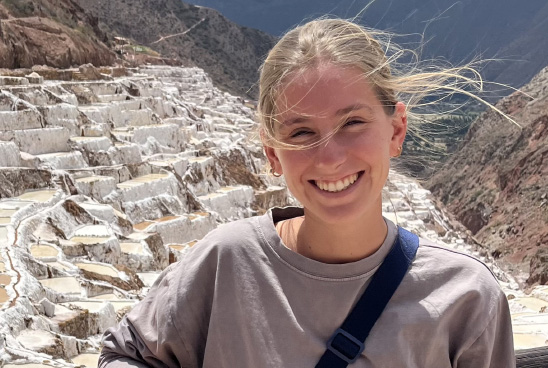
We spoke with Cristina Melero, founder of Fundación Bosco Arts and organizer of this year’s field trip for the Master in International Cooperation Sustainable Emergency Architecture, about the realities of humanitarian architecture, learning through hands-on construction, and why cooperation begins as much in local rural communities as it does abroad. From rebuilding traditional Cantabrian “invernales” in the rain and mud to reflecting on adaptability, resilience, and self-sufficiency, the conversation explored what it truly means to build with and for communities.
What is your background in the humanitarian field?
I am an architect at the Bosco Arts Foundation, where I develop cooperation projects in different parts of the world. To highlight a few, I have participated in the construction of a sports centre and the development of a school in the Peruvian rainforest, as well as the construction of a church in Ukerewe, Tanzania. Currently, I am directing the creation of a retreat centre in Costa Rica, and at a national level, I coordinate the Faros Project, which focuses on generating self-sustainability in vulnerable communities.
What was this year’s field trip about?
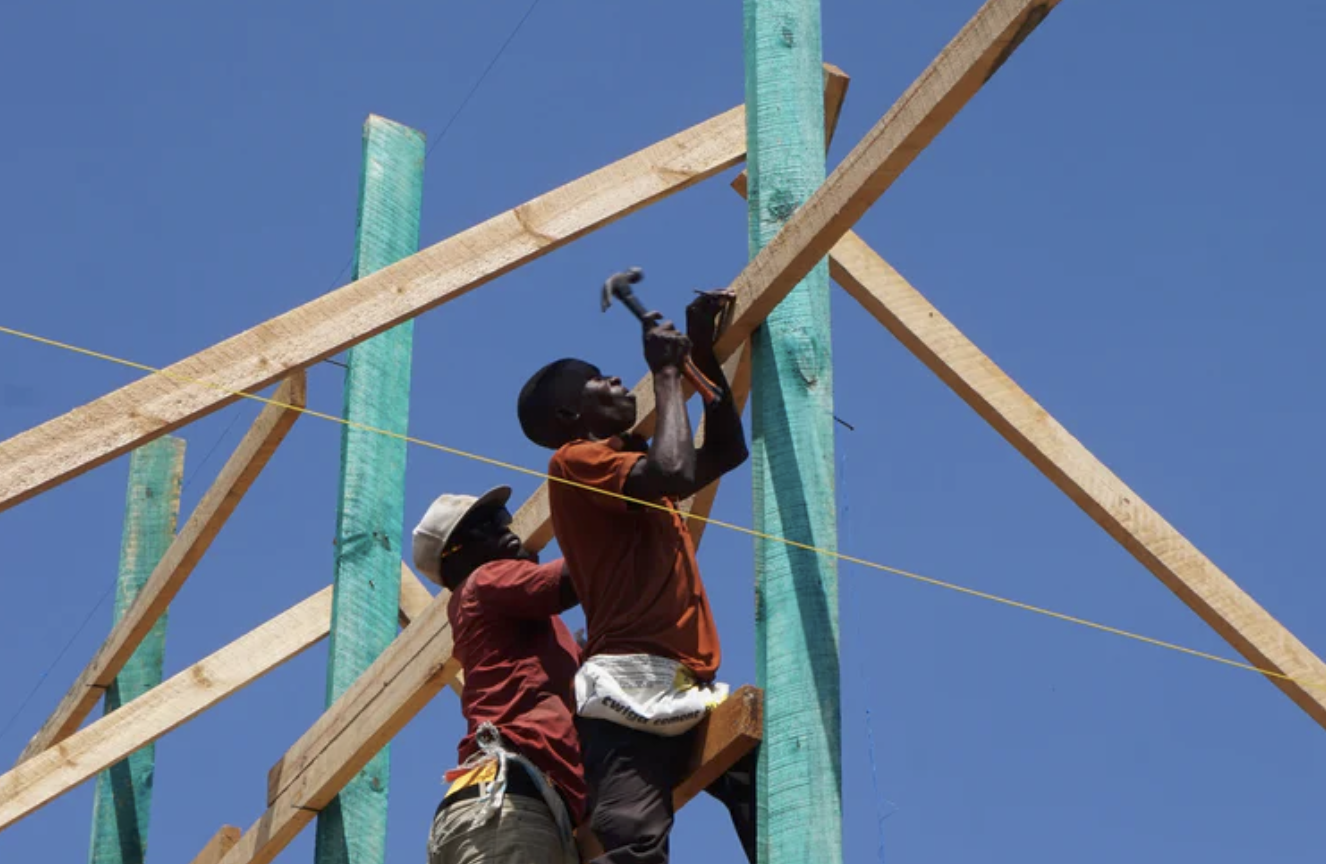
It was a total immersion in the recovery of vernacular heritage. We focused on the reconstruction of the traditional Cantabrian “invernales” (winter barns), using exclusively the techniques and resources native to the area and the materials we had available on-site. The work consisted of learning how to intervene in pre-existing structures to guarantee their maintenance and durability, working solely with the resources that the environment offered us at that precise moment and adapting our work every day to the changing situations.
As the organiser of the field trip, what were your main goals for the experience?
My main goal was to take the students out of theoretical projects and offer them a 100% real fieldwork experience. I wanted them to experience the work that “doesn’t shine” in magazines but is the indispensable foundation of cooperation. I wanted them to learn how to manage resource scarcity and, above all, to understand that with very few means, a huge impact can be achieved if you build with ingenuity, careful thought, and a lot of care.
What is the Bosco Arts Foundation?
It is an organisation that seeks to generate social impact and human development through education and the promotion of the seven arts. As an architect, I understand architecture as the art that has the most direct impact on people’s daily lives. It is a tool with the real capacity to transform lives, dignify human beings, and restore their fundamental rights through the creation of schools, hospitals, housing…
What was the biggest challenge during the International Field Trip?
Without a doubt, constant adaptation. The big challenge was learning to build with what was on the ground, with what “was left” at our disposal. Added to this was the weather factor: we had to work in the rain and learn to rethink our strategy every day to keep moving forward according to what the weather allowed.
What skills or values do you think students developed during the experience?
They developed an incredible capacity to solve technical problems creatively. For instance, since a laser level wasn’t available on-site, we implemented a traditional measurement system using a tube and water; or when we couldn’t work outside due to the rain, we organised ourselves inside the “invernal” to prepare the work for the next day. Furthermore, they took away a great human lesson by seeing how religious communities live and build based on providence and effort. They saw firsthand that, without great luxuries but with time, teamwork, and dedication, incredible things can be done with the most basic means.
How have the events of the past few months affected the originally planned field trip?
It was, in fact, our first great lesson in adaptability. We had a very structured trip to Tanzania planned, but international unforeseen events forced us to find an alternative in record time. This proved to us that cooperation is not a matter of geographical coordinates: help is needed all over the world. It taught us that our work consists of accepting whatever comes, bringing out our best version, and being willing to work wherever it is necessary, using the means we have within our reach.
We often associate “emergency and cooperation architecture” with natural disasters or countries in the Global South. Why is it vital for students to understand that cooperation can also be done in the rural environment of Cantabria?
It is fundamental because cooperation is not a destination on a map, but an attitude and a working methodology. The loss of heritage, the scarcity of resources, and the need to boost a community’s development exist everywhere, even just a few kilometers from our homes. Working in rural Spain has taught them to look at the local environment with the same critical and respectful eyes, proving that the need for purposeful architecture is truly global.
You have worked side by side with the Siervas del Hogar de la Madre. What lesson has their model of community self-construction taught you?
They have given us a masterclass in resilience and self-management capacity. They build and maintain their own infrastructures—from the foundations and landscaping to the creation of the church’s stained glass windows—demonstrating that true sustainability means not constantly depending on external help. For the students, seeing this community manage its own ecosystem has been the best proof that the ultimate goal of cooperation is exactly that: to provide the tools so that a community can be completely autonomous.
In what way do you think rebuilding a stone “invernal” in Cantabria will make these students better architects when they face a project in Africa or Latin America?
It makes them much more humble, practical, and resourceful architects. Understanding how the climate dictates the design or how stone and earth react to water is universal knowledge. But beyond technique, it teaches them to serve with joy. Sometimes it seems that doing cooperation in Africa is more exotic or “sounds better”, but the true lesson is being happy using architecture as a means to help. The goal is for them to learn to put themselves at the service of others with a smile, working with the same dedication and enthusiasm wherever it is needed.
If you had to choose just one image, anecdote, or specific moment from this week working in the mud, what would it be?
I would choose the conversations with the students and how the hardest moments are always the ones that end up bringing the group together. We are very used to imagining social architecture and cooperation in warm climates, and working in the mud, under the rain, has been a huge challenge. It has been very special to see them discover cooperation in a completely different facet from the image we all usually have in mind.