
Social-Spatial Workshop developed by professor Apen Ruiz, the master’s director Carmen Mendoza Arroyo, and coordinator Shareen Elnaschie.
In December, the students of the Master of International Cooperation and Sustainable Emergency Architecture participated in this year’s Social-Spatial Workshop.
The workshop, held annually at the end of the first semester, provides students with hands-on experience in engaging with local communities, conducting research, and developing critical insights on the socio-spatial dynamics of urban environments. This initiative enables students to critically engage with the complexities of urban spaces near their university, fostering an awareness of local challenges.
In recent years, the program has focused on addressing the inherent biases of city planning rooted in patriarchy and capitalism. Applying a feminist approach to spaces that are often far from neutral, the students develop practical recommendations to transform these environments to be more inclusive of women, nonbinary individuals, caregivers, marginalized groups, and people with disabilities. The workshop also integrates principles of climate adaptation, recognizing that urban density only benefits everyone when it is coupled with diversity and ecological awareness.
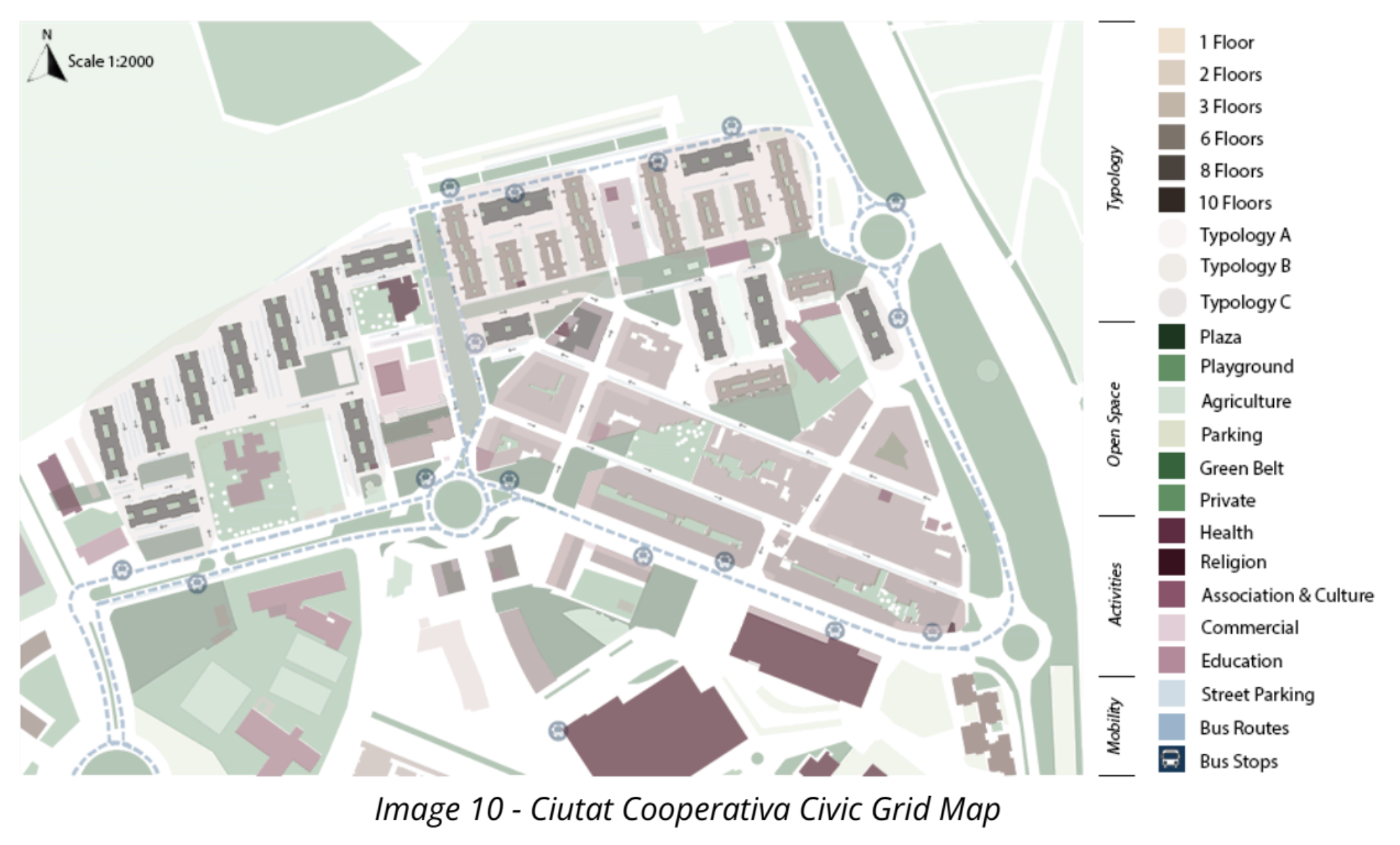
THE NEXUS OF GENDER, CARE, AND CLIMATE: REIMAGINING OPEN SPACES IN CIUTAT COOPERATIVA, SANT BOI DE LLOBREGAT
This year’s case study focused on Ciutat Cooperativa, a district in Sant Boi de Llobregat. Renowned as one of the best-preserved examples from Spain’s “developmentalist” era, Ciutat Cooperativa exemplifies high-quality housing construction practices.
In collaboration with cooperative members and the municipality, the students embarked on an intensive three week mission to provide a detailed analysis of the areas strengths and weaknesses and provide actionable recommendations for betterment strategies considering short, medium and long term suggestions.
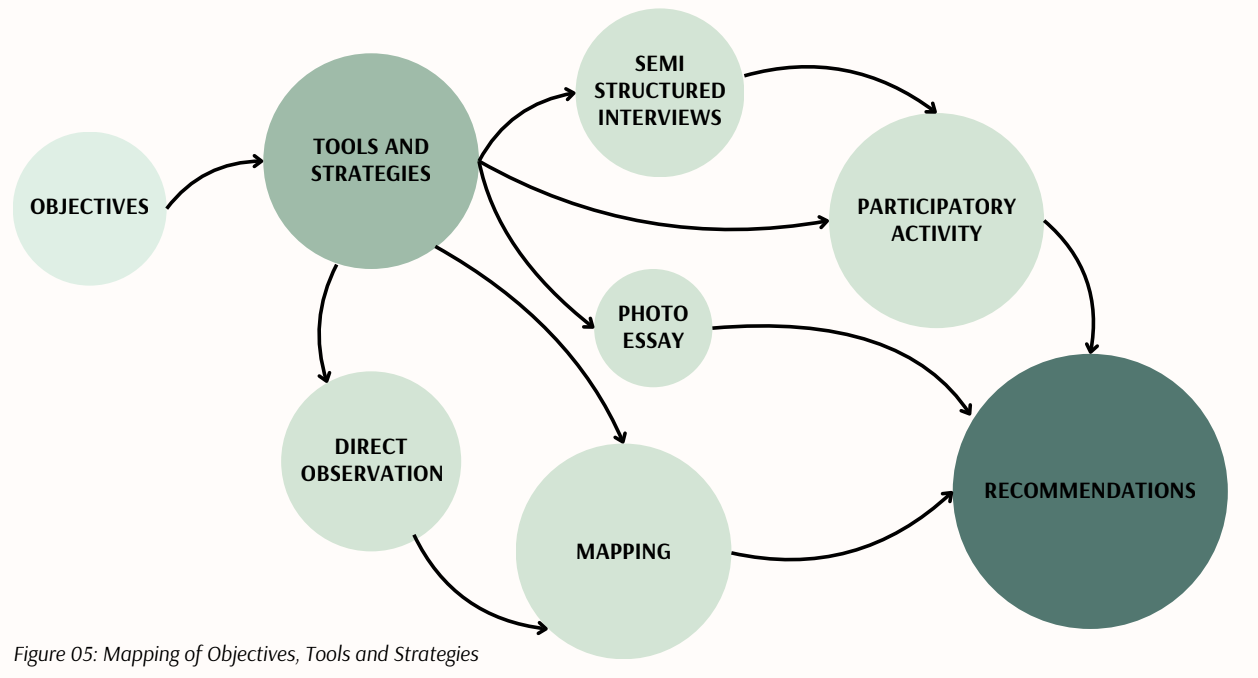
The work followed a structured five-step methodology:
- Physical analysis of urban layers: after acquiring an overall understanding of the area, students divided into groups to explore specific themes: social activity, mobility, open spaces, building typologies and urban fabric.
- Designing data collection strategies: crafting specific methodologies for gathering relevant insights.
- Fieldwork: collecting empirical data on-site and through community engagement
- Data analysis: processing the rich data collected through observations, interviews, surveys and mapping.
- Strategic proposals and recommendations: Formulating actionable plans based on findings.
The core research questions for the workshop included:
- In what ways do gendered experiences shape the way that people, particularly migrant women, perceive and use urban spaces, and how do these experiences differ from those of other groups in the community?
- How do women’s experiences in Ciutat Cooperativa inform broader understandings of gender, mobility, and climate adaptation in urban planning?
- How does the spatial configuration and accessibility of open spaces in Ciutat Cooperativa affect the participation of people, particularly women and marginalized groups, in social, cultural, and recreational activities?
- How do people, especially women, navigate and use public spaces, particularly open spaces like Carrer Cirerers, in the Ciutat Cooperativa neighborhood?
- How do people, particularly women, in Ciutat Cooperativa perceive the impacts of climate change (such as heatwaves, flooding, or urban heat islands) on public spaces, and how do these perceptions influence their use of these spaces?
- How do people of different cultural backgrounds perceive climate-related challenges, and what adaptive strategies do they employ in response to those challenges in public spaces? How can urban design and policy better support these strategies?
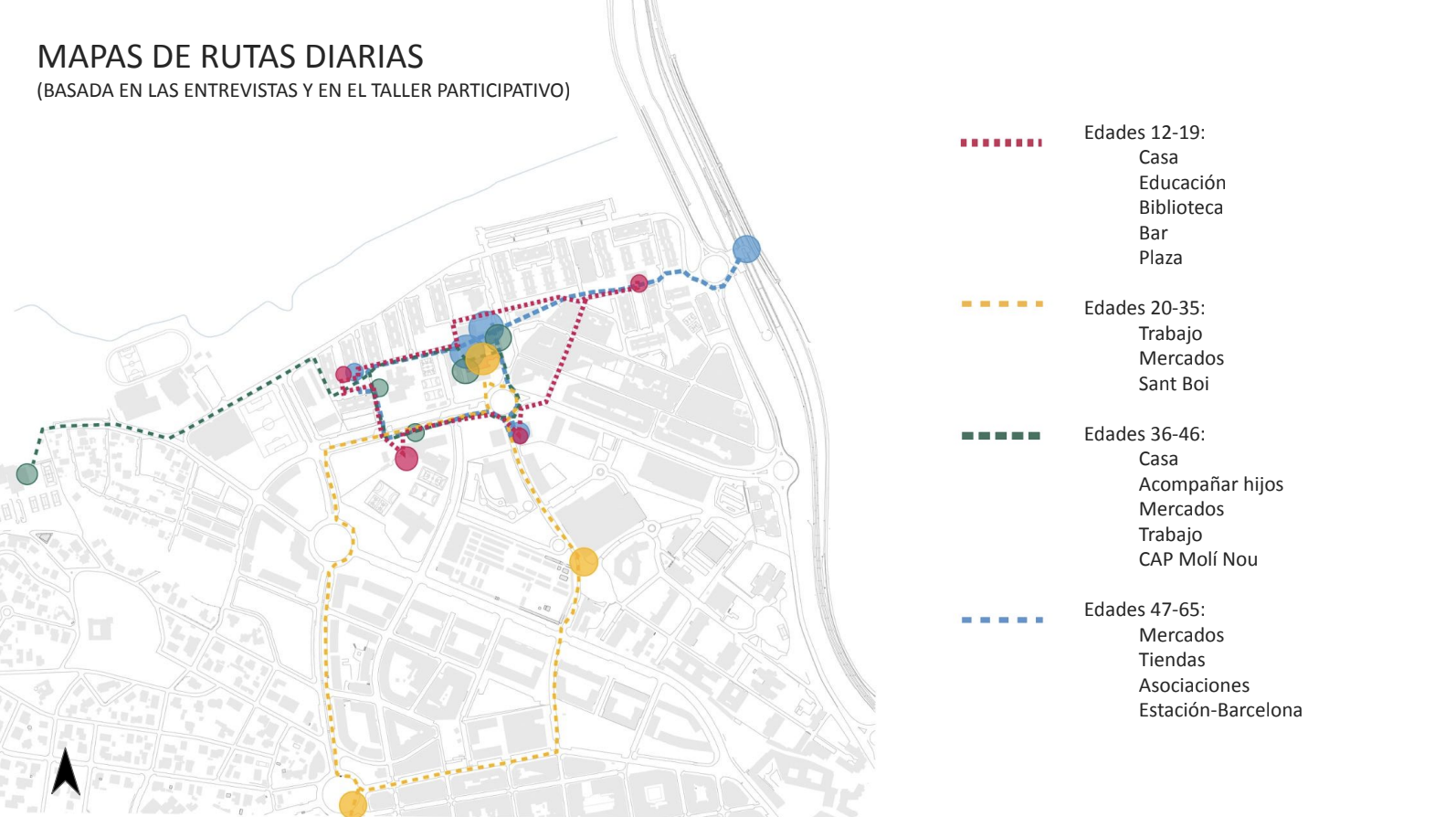
KEY FINDINGS AND RECOMMENDATIONS
Activities
- Residents noted a lack of free time to participate in local activities.
- Communication about neighborhood activities and associations needs improvement, ensuring that information reaches all residents in a clear and inclusive manner.
- Activities should be promoted in multiple languages to engage the diverse community.
- Several local associations closed during the COVID-19 pandemic, reducing community engagement opportunities.
Mobility
- Recommendations included pacifying streets to create safer, more enjoyable environments.
- Identification of areas suitable for a superblock to enhance pedestrian and community interaction.
- Proposals for urban reorganization of Carrer Pau Casals to increase its popularity and usability.
Open Spaces
- Enhancing lighting to improve safety and usability during evening hours.
- Installing inclusive and multilingual signage.
- Addressing visual barriers by relocating recycling bins to less obstructive areas.
- Redesigning seating to encourage social interaction and foster community connections.
Typology and Urban Fabric
- Façade improvements to enhance safety, aesthetics, and hygiene.
- Reducing noise pollution by relocating the market’s drop-off area underground, addressing residents’ complaints about nighttime noise.
- Improving street lighting to promote safety, encourage social use, and support pedestrian-friendly initiatives.
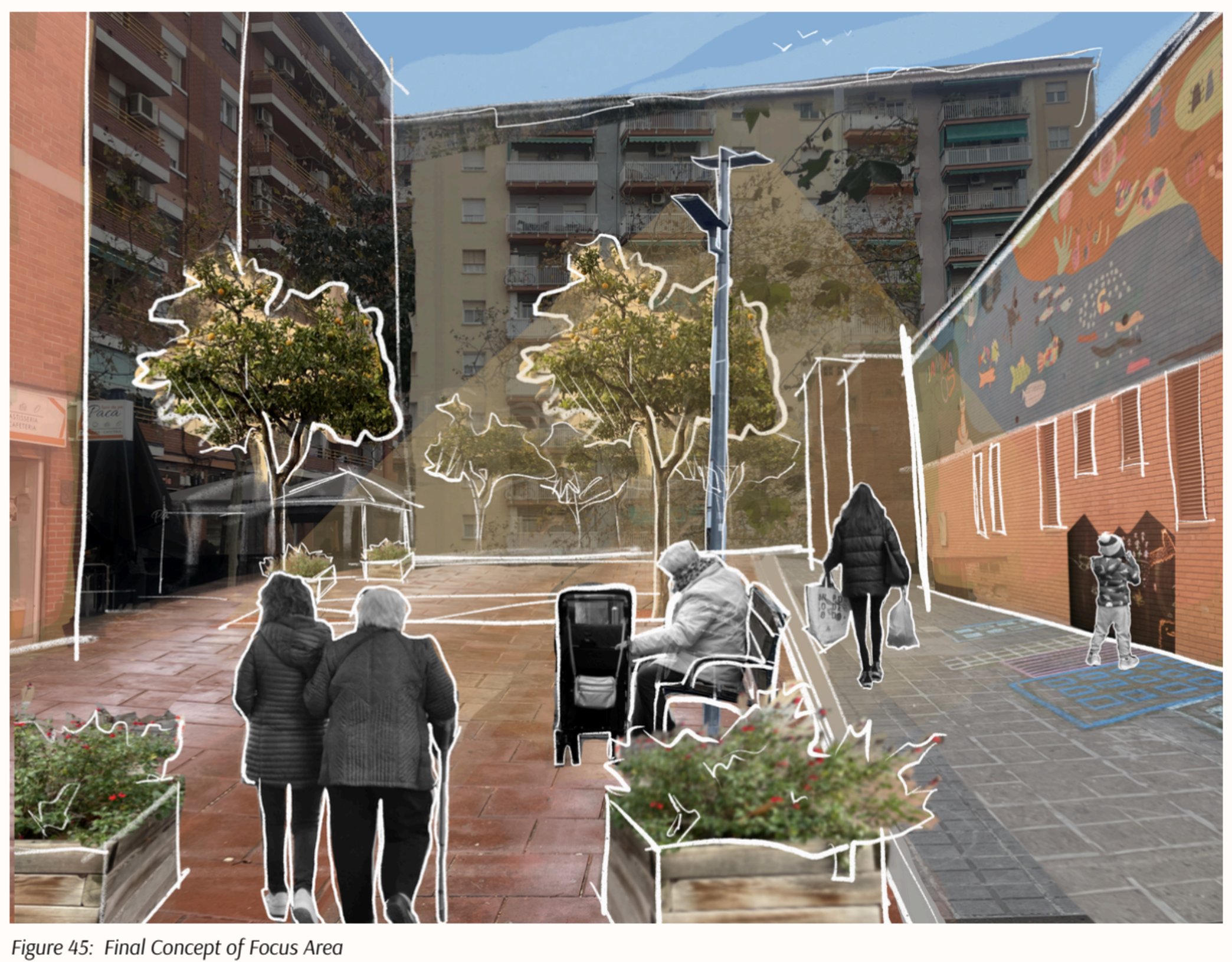
CONCLUSION
While Ciutat Cooperativa serves as a valuable historical reference for urban development, its infrastructure must evolve to meet contemporary needs of inclusivity and environmental sustainability. The students’ research revealed widespread concerns about infrastructure, security, connectivity, noise pollution, and limited pedestrian pathways. By addressing these challenges with targeted solutions, Ciutat Cooperativa can transform into a model of inclusive and climate-adaptive urban design, benefiting its diverse community.
We would like to give special thanks to Ciutat Cooperative members and the municipality for their trust and guidance. Specially to Silvia Castillo Martínez and Antoni Xavier Fernández López of the Ajuntament de Sant Boi de Llobregat.