
Our Team
Collaborating Institutions
In addition to our official partnerships with UN-Habitat, RMIT University, and IFRC, we regularly collaborate with more than 40 other organizations that provide our students with quality internships. Our students have completed internships in more than 113 institutions all around the world, forming a diverse network that our alumni benefit from.
OUR VISITING FACULTY’S OPINION OF THE MASTER PROGRAM:
Steering Committee
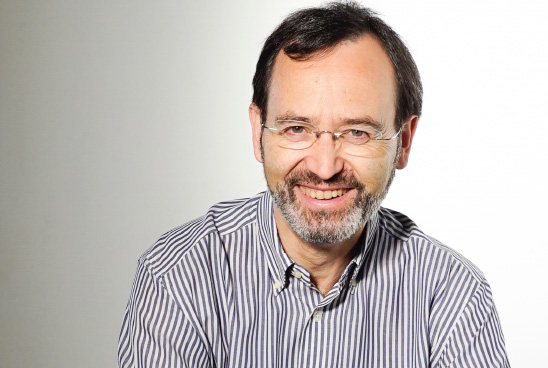
Alberto T. Estévez
Director
Alberto T. Estévez, architect, chairman-professor, founder of ESARQ-UIC Barcelona as an avant-garde international school (1996): the first in the world including mandatory subjects of sustainability and international cooperation. Founder of 2 research groups, 4 PhD programs and 4 master programs, as the Master of International Cooperation in Architecture (2004), being now its director too. He has written around 300 publications, directed 30 PhD thesis, hundreds of master thesis and final degree projects, with official recognition of 7 six-year research periods.
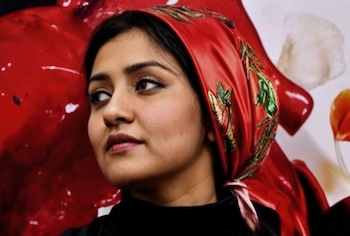
Yomna K. Abdallah
Director
Dr. Yomna K. Abdallah is an Assistant Professor of Architecture Composition at ESARQ School of Architecture at Universitat Internacional de Catalunya. She has been an accredited lecturer from the ANECA and AQU Spanish and Catalan Quality agencies since 2021. She has also received recognition for six years of research from ANECA for her interdisciplinary research integration in architecture to achieve sustainability. Dr. Abdallah holds two doctoral degrees, one in Architecture obtained from UIC in May 2020, and the other in Bioengineering.
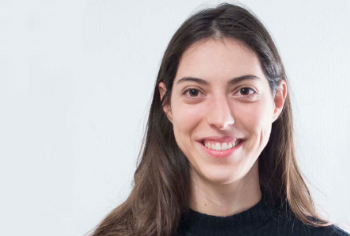
Georgina Surià
Communication Officer
Having studies in Architecture and Performing Arts, Georgina is constantly looking for ways to complement her first area of study, Architecture, and the conceptualization and communication skills that Performing Arts has given her. Nevertheless, she continues her research separately in both areas. She has worked in social interdisciplinary projects.
Professors & Collaborators
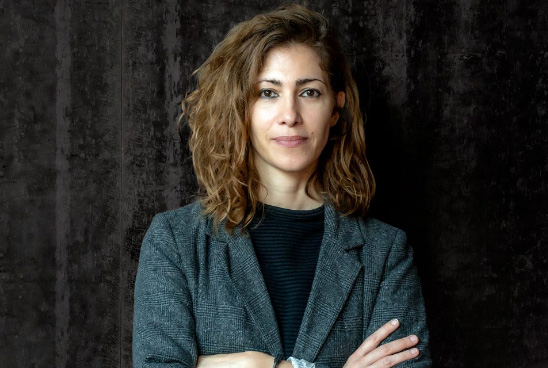
Estel Ortega
Humanitarian Shelter and Settlements
Estel Ortega is an architect trained at the Barcelona School of Architecture (ETSAB, UPC). She has been teaching at ETSAB since 2010 and at the School of Architecture (ESARQ) of the International University of Catalonia (UIC) since 2008, and has participated in workshops and collaborated with other national and international universities. She founded the architecture studio Cubus Taller d’Arquitectura in 2003, and 15515 Arquitectura in 2017. Her work stands out in the fields of cooperation, research, and rehabilitation, as well as museography and museology.
Marta Benages
Bottom-Up Strategies for Regeneration
PhD in Architecture, UIC Barcelona (2015). Assistant professor at the School of Architecture UIC Barcelona. Marta's research focuses on qualitative methodologies and access to communities' experiential knowledge, working within urbanism, landscape planning and environmental psychology. In this field, she studies the process of appropriation of open spaces in metropolitan areas in order to recognize people-place bonds and citizen engagement to landscapes of collective identity.
Lorenzo Chelleri
Urban sustainability & Resilience
PhD in Urban Geography. He is currently a Postodctoral Research Fellow at the Gran Sasso Science Institute (GSSI Cities), and founder member and coordinator of the Urban Resilience Research Network. He has worked for the European Environment Agency, and has been involved in different European and international projects on climate resilience and urban sustainability. His main research interest is around the social implications of urban transitions.
Mariona Ayxelá
Cooperation for Development
With over 20 years of experience in the non-profit and international cooperation sector, Mariona has focused her career on designing and managing projects that promote education and social development in vulnerable contexts. She is currently working as a consultant and lecturer, advising organizations and companies on fundraising, social impact, and sustainability, while fostering innovation and collaboration in the field of development.
Andreas Schiffer
WASH & Logistics
Andreas has over 25 years experience in humanitarian responses to disasters and conflicts. He has worked with NGOs such as MSF, Acción contra el Hambre and Intermon Oxfam as a logistician, coordinator, WASH expert, consultant, trainer and researcher in numerous countries around the world. Since 2006 he works as a freelance consultant and trainer, organizing courses in humanitarian logistics and WASH with his enterprise FLASH, dedicated to strengthening the impact of humanitarian actors through practical, technical and bespoke training for NGO staff and other professionals looking to improve their impact in the humanitarian field.
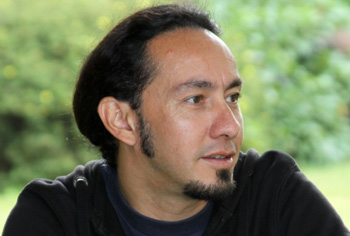
Paul Cabrera
Reconstruction and Displacement
Architect. Master in Architecture, Urban Planning and Technologies for Developing Countries (Politecnico di Torino). Building Design and Engineering Approaches to Infection Control Course (Harvard School of Public Health). He worked an architect and urban planner in the Balkan region after the war, supported MSF’s medical projects in the Democratic Republic of Congo, Ethiopia, Pakistan and Liberia and is currently a technical referent for Construction and Sheltering at the MSF Spain Headquarters. He participates actively in the emergency phase and strategic planning of reconstruction of emergencies such as the January 2010 earthquake in Haiti.
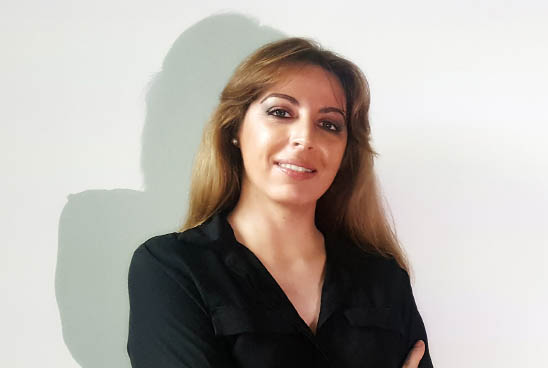
Viviana Hernaiz
Humanitarian Design and Implementation
Viviana studied Architecture at the Universidad Católica Boliviana and holds a Master’s degree in
Biodigital Architecture from ESARQ–Universitat Internacional de Catalunya. She is the co-founder
of MATERIAL Design Studio in New York, where she explores the interdependence between
Computational Design, Sustainability and Impact Design. Her teaching experience spans several
universities, and her research and professional practice—focused on the application of digital
techniques in architectural design—have been developed and exhibited across Europe, the
United States, and Latin America.
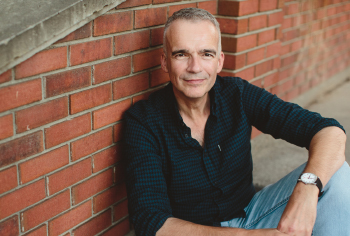
David Sanderson
Humanitarian Shelter and Settlements
Emergency housing support for disadvantaged communities displaced by natural disasters, geo-political conflicts, socio-economic exclusion and environmental factors. David is the Inaugural Judith Neilson Chair in Architecture and has 30 years' experience working across the world in development and emergencies. From 1994-98 David was a Project Manager at the Oxford Centre for Disaster Studies. David worked for eight years for the NGO CARE International UK, as head of policy and subsequently Regional Manager for southern and west Africa. From 2006-2013 David was Director of CENDEP, a centre at Oxford Brookes University focusing on development and emergencies.
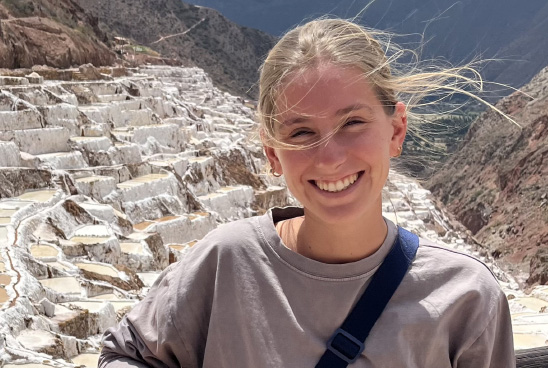
Cristina Melero
Cooperative architecture
Cristina Melero holds a degree in Architecture from the Polytechnic University of Valencia and currently works as a project coordinator at the Boco Arts Foundation. Her professional focus is on cooperative architecture, with experience in projects in Peru, Equatorial Guinea, Tanzania, and Spain. She believes in an architecture that serves humanity — conceived as a tool for social transformation and for improving people’s lives — integrating beauty and functionality to address genuine human needs.
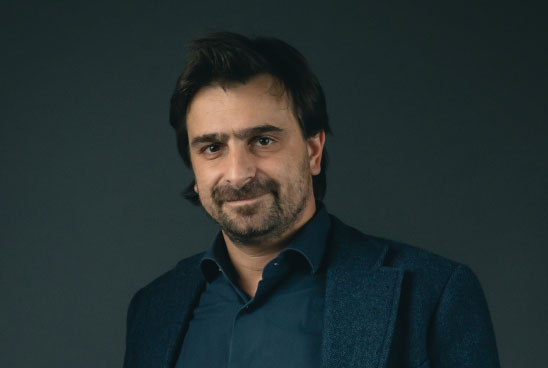
Borja Ferrater
Humanitarian Shelter and Settlements
Borja is an architect with a multidisciplinary background and a passion for designing spaces that inspire and transform. He earned his architecture degree, Master’s, and PhD at UIC Barcelona, where he now teaches Studio Design. As co-founder of OAB and ELIA, Borja leads projects that merge innovation, geometry, and sustainability, creating meaningful, future-oriented architecture. His work has received international recognition, reflecting a commitment to design excellence, research, and the evolution of contemporary architectural practice.
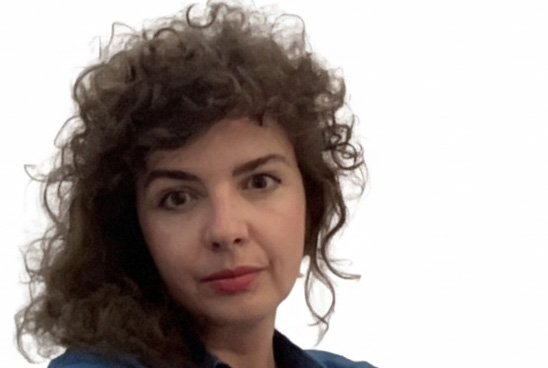
Lamila Sismisic
Socio-Spatial Workshop
Lamila is an instructor at Rochester Institute of Technology Croatia, specializing in advanced digital applications in design practice and generative design processes. She earned her Ph.D. and Master’s at Universitat Internacional de Catalunya, focusing on interdisciplinary approaches that blend art, technology, computation, and architecture. Her research explores data visualization and the creation of spaces through intuitive visual languages, aiming to bridge artificial and real realms with innovative design thinking.
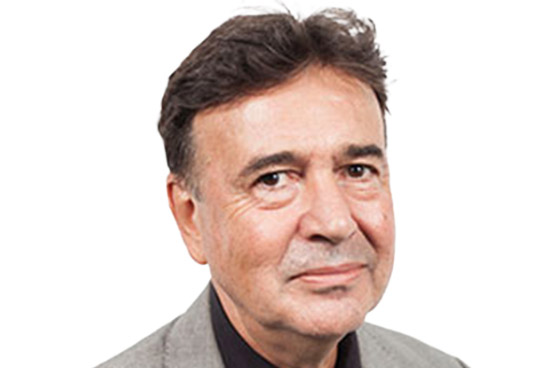
Constantin-Victor Spiridonidis
Environmental Justice
Dr. Constantin Spiridonidis is an Architect (Univ. of Thessaloniki, Greece) Urban Planner (Univ. Paris VIII, France) and Dr. in Architecture and Urban Design (Univ. of Thessaloniki, Greece). He is a Professor at the Faculty of Architecture and Interior Design at Canadian University Dubai. Prior to this, he was a Tenured Professor in School of Architecture of Aristotle University of Thessaloniki, Greece. Dr. Constantin Spiridonidis's research interests are centered on design theory, architecture and urban design, architectural education and design pedagogy. He has vast experience in the management of academic educational programs investigating different educational environments.

Heba Mohamed
Emergency Medicine
In the Master's program, Dr. Heba Mohamed teaches the medical aspects and needs that must be considered in international cooperation actions from an emergency perspective. She is a Medical Doctor, graduated from the Faculty of Medicine, Cairo University, Al Kasr Al Ainy (the top ranked in Egypt and second in Africa and Middle East). With extensive training in Emergency Medicine, and a strong background in interdisciplinary research. Her research interests lie in emergency medicine in service of human centred design.
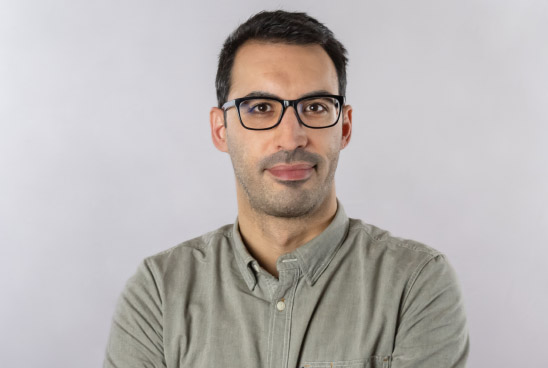
Diego Navarro
Sustainable Urban Living
Dr. Diego Navarro holds a degree in Architecture from UIC Barcelona, where he has been teaching since 2009. His PhD research was supported by the Junior Faculty scholarship from “La Caixa” Foundation and has also received teaching innovation grants from the PUIG Foundation. Currently, he is part of the research group Sustainable Urban Living (SUL), with a cross-disciplinary role related to urbanism, focusing on procedural design, machine learning and genetic algorithms. He has also led several research projects on the automation of BIM and collaborated with companies such as Asuni and McNeel Europe.
Joan Enric Campa Molist
Theories of Development
PhD in Philosophy from the Universitat Autònoma de Barcelona (UAB). His research focuses on ethics of responsibility, particularly Emmanuel Lévinas, and human rights. He founded an NGO in the Dominican Republic and served as academic director and lecturer at several universities in the country between 2014 and 2022 (PUCMM, UTESA, and UASD). He holds multiple master's degrees in human rights and project management, and has international experience as an advisor in development cooperation projects (UNDP).
Octavi de la Varga Mas
Legal Framework
Octavi de la Varga Mas is currently Advisor for International Strategic Projects at the Barcelona Provincial Council. He has over of 20 years of experience in relation to NGOs, local governments international action, decentralized cooperation, territorial governance and urban development. He has a degree in law, with a master's degree in European studies, a postgraduate degree in international humanitarian aid and NGO management and a postgraduate degree in international relations. He is also member of the advisory board of Paradiplomacy.org.
Camila Garcia Torighelli
Human Resources Management in Cooperation Sector
Camila has been the Director of Communication, Community, and Marketing at Ashoka Spain and Portugal since November 2022. Before joining Ashoka, she spent seven years at Oxfam Intermón, where she served as Brand Manager, Campaigns Manager, and Project Manager. Today, she is also a professor in the Master’s in International Cooperation, Development, and Social Economy at Universitat Internacional de Catalunya, teaching Social Communication, Community Building, Volunteer Management and the Psychology of Cooperation. Additionally, she lectures at universities in the United States, England and South Africa.
Carmen Geha
Social Entrepreneurship
Carmen Geha is Co-Founder and Managing Director of Soltara, a boutique consulting firm specializing in customized strategy design and leadership development programs. She is passionate about and dedicated to helping organizations train and promote diverse talent in emerging markets. Carmen holds a PhD in International Relations from the University of St Andrews (2014). She has held leading academic positions, including Maria Zambrano Fellow at Pompeu Fabra University (2022–2024) and tenured Associate Professor of Public Administration at the American University of Beirut (2020–2022).
Sílvia Albareda Tiana
Director UIC Cooperation
Dr. Sílvia Albareda-Tiana is Director of the Office of Cooperation and Sustainable Development of the Universitat Internacional de Catalunya, and a Reader at the Faculty of Education Sciences. With a background in biology, theology, and environmental education, she has devoted 40 years of her life to education, both in secondary and higher education, specializing in science education and ESD. She has led several research projects. Her current research focuses on integrating sustainability—sustainability competencies and climate education— into curricula.
Justyna Morawska
Socio Spatial Workshop
Justyna Morawska is a tenured lecturer at the École Nationale Supérieure d'Architecture Paris-Val de Seine (France). She is a graduate architect (DPLG) from ENSAB (2003) and holds a Master's degree in "Genetic Architectures" from ESARQ (2004), as well as a DPEA in Research in Architecture from ENSAPLV (2014). She obtained a PhD in architecture: in November 2022, she defended her thesis titled "How to Think the Diagram? On the Meaning of the Architect's 'Papers'.
Mariona González
Teamlabs, Barcelona Circular (BAC)
Mariona González is the Director of TeamLabs Barcelona, the radical learning lab of Mondragon University. She leads a vibrant community and an innovative space where entrepreneurship is the learning tool and the team is the technology used to address today’s social and environmental challenges. She has over 15 years of experience in fundraising at Oxfam Intermón. Mariona specializes in building alliances that foster cooperation among diverse actors, creating collaborative ecosystems and driving business model innovation.
Anais Mangin
Oxfam
Anais Mangin is Programme Lead Private Sector & Impact Investment at Oxfam Spain, a leading international development NGO. She leads the development of new projects related to the impact economy and innovative funding models for the SDGs (innovative finance, impact investment). She has more than 15 years of experience in international cooperation, working on private sector development projects in developing and emerging markets. Anais is also a professor in the Master's in International Cooperation and Social Economy at UIC, teaching about International Cooperation and NGOs.
Previous Years: Visiting Professors & Collaborators
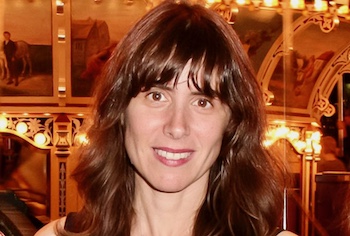
Amanda Schachter
Master's Degree 1st Director, 2004-2006
Becoming Erasmus Mundus Master.
Architect, AIA, B.A. from Columbia College in New York and M. Arch from Princeton University, is co-founder and principal with Alexander Levi of SLO Architecture (New York), and prior to starting their studio, they were involved in numerous public building projects in Europe where they resided from 1998-2007. Having received numerous awards, SLO Architecture is a full-service certified woman owned (WBE) design firm that realizes designs for wide-ranging private and public clients. In 2004 the director of ESARQ-UIC Barcelona School of Architecture entrusted her with the direction of this master's program, that she launched as an Erasmus Mundus program.
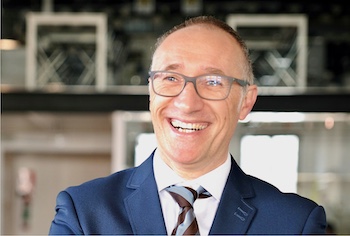
Ignasi Pérez-Arnal
Master's Degree 2nd Director, 2006-2009
Becoming Emergency Sustainable Architecture title.
Architect, holds 4 master's degrees from 4 universities, leading figure in innovation within the construction sector. Founder of BIM Academy, and of Atom Modular, that manufactures housing using automotive industry methods. Director of the Advanced Architecture and Construction 4.0 Congress at REBUILD, with extensive teaching and publications experience. In 2006 he was put in charge of this Master's program, which, after the most devastating tsunami in history (the Sumatra-Andaman tsunami), and as, also commissioned by Alberto T. Estévez, was director of the Sustainability Department of ESARQ since 2000, added the name "Sustainable Emergency Architecture" to the title of the Master.
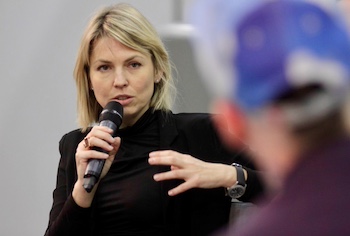
Giovanna Carnevali
Master's Degree 3rd Director, 2009-2012
Becoming official University Master.
PhD Architect, Strategic Designer Consultant about Architecture and Urban Development that links client’s needs to the architectural, digital, social, economic, legal issues by teaming up the necessary professionals. In 2010 she was appointed director of MICSEA and by preparing the documentation obtained the official master's degree status. After she went to assume the Direction of the Mies van der Rohe Foundation. Since 2018 she is the Executive Director of Urban Planning in NEOM, Saudi Arabia. Before, she has been at the head of international Projects Developments at Strelka KB (Moscow, 2015-18) and Coordinator of Urban Sciences Program at IaaC (Barcelona, 2017-18).
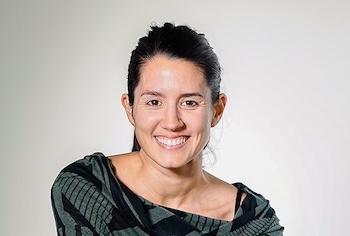
Raquel Colacios
Master's Degree 4th Director, 2011-12
Ph.D. from the Universitat Internacional de Catalunya (UIC) in Barcelona. She is currently a researcher at TURBA Research Group at the Open University of Catalonia (UOC) in Barcelona. From 2010 to 2020, she served as the coordinator and co-director of the Master’s in International Cooperation in Sustainable Emergency Architecture at UIC Barcelona’s School of Architecture, where she also led the Cooperation Area for the undergraduate architecture program. In recent years, she has held positions as an assistant professor at Umeå University in Sweden and as a visiting professor at KU Leuven and TU Darmstadt. Colacios is also a co-founder of the Taab6 studio in Barcelona.
Carmen Mendoza Arroyo
Master's Degree 5th Director, 2012-2025
Architect with a PhD in Urban Design and Planning. Associate Professor at UIC School of Architecture. Vice Dean of the School of Architecture at UIC Barcelona from 2013 to 2022. Director of the MICSEA from 2012 to 2025. She combines teaching and research which delves into the understanding of how to respond to increasing stressors such as disasters, displacement, migration and spatial inequality in urban settings, through participatory socio-spatial methodologies. She has developed projects and published articles and books related to her research topics.
Nathaniel Corum
Sustainable Native Communities Collaborative
Architect with degrees from Stanford and the University of Texas at Austin, Nathaniel is the recipient of a Fulbright Scholarship and a Rose Architectural Fellowship. Previously the Head of Education Outreach at Architecture for Humanity and a Senior ECPA Fellow under the auspices of the U.S. Department of State, he is Design Director at SNCC and collaborates with international teams and tribal communities on planning and design/build projects. Author of Building a Straw Bale House, his work has featured in Architect Magazine, Humanitarian Architecture, and The New York Times.
Mattia Leone
Technology and Environmental Design
Architect and PhD in Building Technology and Environmental Design, Mattia Leone is Assistant Professor in Architectural Technology at the Department of Architecture (DiARC) and Senior Researcher at PLINIVS-LUPT Study Centre at the University of Naples Federico II (UNINA). His main research activities concern sustainable design and technological retrofitting of buildings and public spaces, with particular reference to environmental design and building technologies for Disaster Risk Reduction and Climate Change Adaptation. As a member of UCCRN - Urban Climate Change Research Network, he is in the Coordination Board of the UCCRN European Hub and Scientific Responsible of the Climate Resilient Urban Design Workshop series, exploring multi-scale sustainable and resilient urban design strategies through advanced applications of GIS and parametric design tools.
Nabeel Hamdi
Oxford Brookes University
Architect. He is Professor Emeritus of Housing and Urban Development at Oxford Brookes University, where he set up the highly successful Masters in Development Practice in 1992. He is a teaching fellow at The Development Planning Unit, University College London, has been an Arup Fellow at the University of Cape Town and is adjunct professor at the National University of Technology, Trondhiem, Norway. An advocate of small-scale change at grass-roots level, Nabeel has consulted on participatory action planning and upgrading of slums in cities to all major international development agencies, and to NGOs worldwide. He is the author of several landmark publications, including Small Change and Housing without Houses.
Andrea Nóblega
PhD in Human Geography (UAB)
With a background in architecture, she holds a double master’s degree in International Cooperation in Urban Development (TUD) and International Cooperation: Sustainable Emergency Architecture (UIC). Her research centers on political ecology, sustainable urban transformations, and Nature-based Solutions (NbS). She has actively contributed to discussions on the eco-social and eco-political dimensions of NbS and their potential to foster more just and sustainable development strategies. Her work critically examines governance processes, environmental trade-offs, and environmental justice within sustainable urban transformations. Currently, she is a research professor at the Universitat Oberta de Catalunya, where she is part of the Urban Transformation and Global Change Laboratory (TURBA).
Torange Khonsari
London Metropolitan University
Co-Founder and Director of the art and architecture practice Public Works, an inter- disciplinary practice working on the threshold of participatory and performative art, architecture, anthropology and politics. Her projects directly impact public space, working with local organisations, communities, government bodies and stakeholders. She is course leader of the Design for Cultural Commons Masters at The Cass (London Metropolitan University). She has taught at international universities such as UMA school of architecture in Sweden, unit leader at Royal College of Art - London as well as a visiting professor at Barbican and Guildhall school of Music and Drama.
Marta Peña
IFRC
Architect, specialized in construction by ETSAM. She has worked as an architect for seven years in Spain before working in international cooperation with the Red Cross in 2005. Since then she has coordinated emergency shelter response and post-disaster reconstruction programs in Sri Lanka, Peru, Senegal, Haiti and the Philippines. She is currently based in Geneva, Switzerland, working with the International Federation of the Red Cross and Red Crescent Societies (IFRC) in the Shelter & Settlement department as the focal point for training and support operations.
Reena Tiwari
Curtin University
Architect. Masters in Urban Design. PhD in Urban Studies. Reena is Associate Professor in the Departments of Urban & Regional Planning and Architecture at Curtin University of Technology Perth, Australia. Her expertise is in Urban Design and Urban Theory and has a global perspective and wide ranging experience on city growth and development. Reena received Australian National Award for her outstanding contribution to student learning for developing a cross-disciplinary and integrative approach to teaching urban theory and design, blurring boundaries between class room and the ‘real world’ experience.
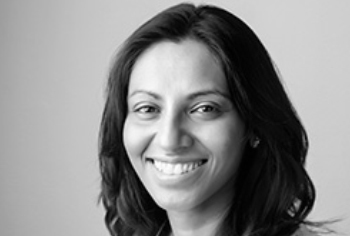
Farzana Gandhi
New York Institute of Technology
Her architecture and planning practice, Farzana Gandhi Design Studio, focuses on sustainable and socially conscious solutions, both locally and abroad. Recent work includes a primary school in Senegal, Africa; community visioning and streetscape design in East Harlem, NY; resiliency strategies and NYCHA campus connectivity in Inwood, NY; digital tools and applications aimed at effective community engagement; and replicable, modular infrastructure for Puerto Rico. Farzana is most interested in how widespread social impact can be achieved at the intersection of architecture and its environmental, cultural, and socioeconomic framework. Her deep commitment to community outreach is driven by deep inquiry, investigation, and integration.
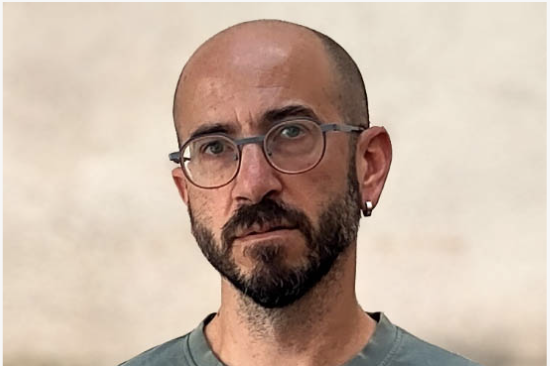
Arnau Boix
Architect and Urbanist at Estel Coop
With 20 years of experience in cooperative urban processes and citizen participation. I believe that design should enhance people’s quality of life, focusing on the interaction between individuals and the built environment. My work emphasizes how people with diverse abilities perceive cities and architecture.
Passionate about collaborative design, I work across interior architecture and public spaces, where human interaction shapes spatial experiences. I value transdisciplinary teamwork, recognizing that everyone involved in a process contributes to the outcome of spatial transformation. My approach prioritizes respect, empathy, and emotional investment, paired with organization and determination to achieve shared goals that positively impact communities.
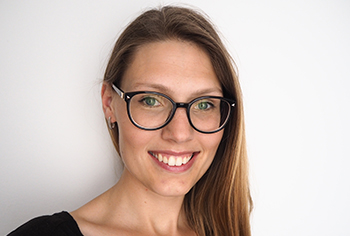
Allison Koornneef
MICSEA Program Coordinator 2015-2024
Allison is from Toronto, Canada and has a background in Environmental Design from OCAD University. As a graduate of our 2012-13 class, her thesis analyzed participatory data gathering processes in informal settlements, and during her internship with SPARC in Mumbai, India, she contributed to a sanitation survey using GIS mapping. She is passionate about water and sanitation, mapping, and participatory action as sustainable development.
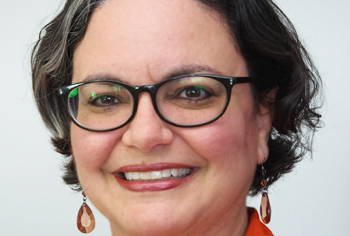
Clara Irazabal
Columbia University GSAPP
Architect. Master in Architecture and Urban Design and Planning. PhD in Architecture. Former head of GSAPP's Latin Lab, she is directs the Latina/o Studies Program and is Professor of Planning in the Department of Architecture, Urban Planning + Design at the University of Missouri, Kansas City. She has worked as consultant, researcher, and professor in South America, Europe, Asia and the US. She explores social justice struggles manifested in processes of transformation of urban space and how markers of minoritized identity and their intersections with one another are negatively impacted by planning processes, when the supposed mandates of planning urge respect, celebration, and nurturing of diversity.
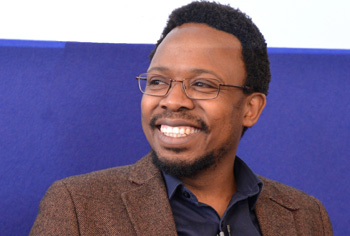
Mbongeni Ngulube
Development practice & Diaspora
Architect and Urban Designer. Worked in South Africa and founder of MNA architects, Johannesburg. Master in International Cooperation in Urban Development (TUD, Germany) and in Housing, Urbanisation and Sustainability in Developing Contexts (UIC, Spain). Currently a Doctoral researcher in the Anthropology of Development and Urbanism at the Institute for Anthropological Research in Africa (Katholieke Universiteit Leuven, Belgium), his research focuses on the impact of diaspora and social movements on development.
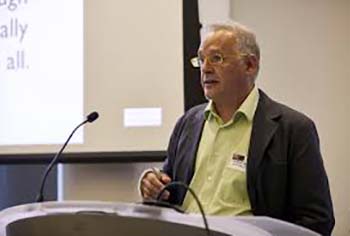
Sergio Palleroni
Portland State University
Architect. MSArchS in History Theory & Criticism from the MIT. Co-founder of BaSiC Initiative, he has worked on housing and community development in the developing world since the 1970’s, both for not-for-profit, governmental, and international development and relief agencies such as the United Nations and the World Bank, and the governments of Chile, Colombia, Mexico, Nicaragua, India and Taiwan. He is Professor and Fellow of the new Center for Sustainable Processes and Practices at Portland State University and has received numerous awards, including the prestigious AIA Latrobe Prize in 2011.
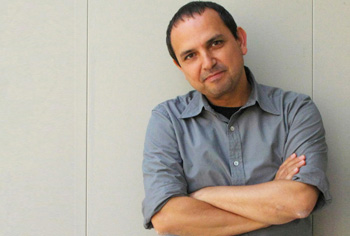
Teddy Cruz
University of California San Diego
Originally from Guatemala Teddy Cruz a Professor of Public Culture and Urbanization in the Department of Visual Arts at the University of California, San Diego. He is known internationally for his urban research on the Tijuana/San Diego border, advancing border neighborhoods as sites of cultural production from which to rethink urban policy, affordable housing, and public space. Recipient of the Rome Prize in Architecture in 1991, his honors include representing the US in the 2008 Venice Architecture Biennale, the Ford Foundation Visionaries Award in 2011, and the 2013 Architecture Award from the US Academy of Arts and Letters.
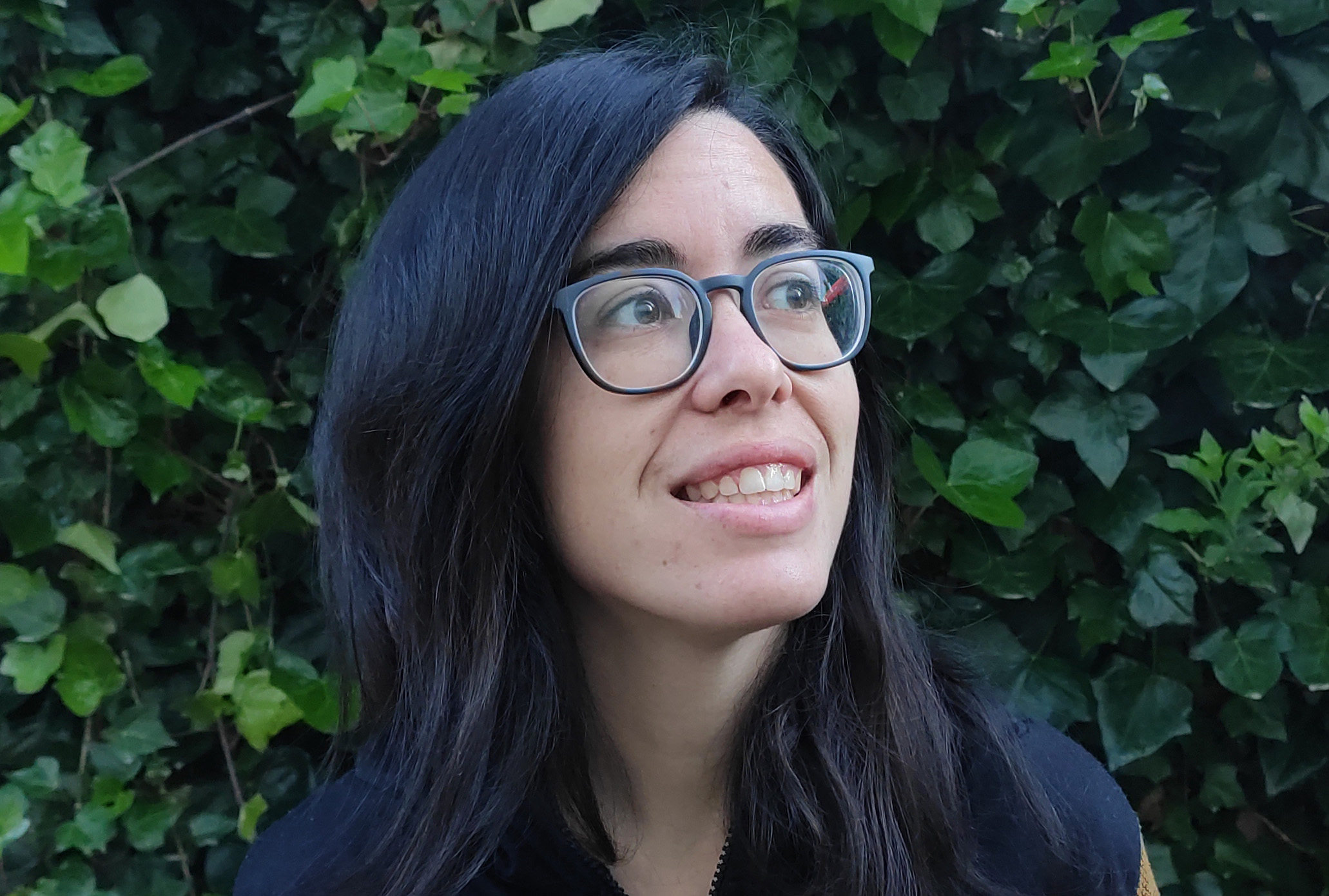
Mar Satorras
Metropolis Institute at UAB
PhD in Environmental Sciences and Technology from the Universitat Autònoma de Barcelona (UAB), 2017. She is an anthropologist and environmental scientist holding a MSc in climate change and is currently based at the Metropolis Institute, a public urban research center located at UAB which aims to support and inform policies and action to promote urban transformation, equity, and sustainability. Mar’s research focuses on urban sustainability challenges approached under socio-political lenses, with extensive experience on the water cycle and the climate emergency. Her interdisciplinary research at the interface between environmental and social sciences combines ethnographic, historical, and geographical perspectives.
Hug March
Political ecology & Economy of urbanization
PhD in Environmental Sciences from the Universitat Autònoma de Barcelona (UAB), 2010. Hug is a research fellow at the Internet Interdisciplinary Institute (IN3), Universitat Oberta de Catalunya. His research is focused on the political ecology and economy of urbanization and has contributed to debates around urban water infrastructure and water provision. He has contributed to over 20 publications to journals in the fields of Geography, Environmental Studies/Sciences, Urban Studies and Economics, among other disciplines.
Sandra Bestraten
Honorary Director & Committee Member
Assistant professor at UIC School of Architecture and at ETSAB-UPC. President of University without Borders (USF), where she develops urban planning and social and educational facilities with social participation. Co-founder of Bestraten Hormias Arquitectura, which specializes in sustainable projects using ecological materials such as timber and rammed earth. Her research is focused on housing and cooperation in developing countries.
Julian Tung
WASH and Shelter Humanitarian Technical Advisor
Currently working in CARE International and serving as Technical Advisor for the NW Syria Shelter Cluster. Julian Tung has more than 10 years of experience leading and advising humanitarian responses in the Middle East, Europe, Caribbean, Africa and South Pacific Islands. Julian has a Masters Degree in Civil, Structural and Environmental Engineering. He currently provides technical support to humanitarian actors in NW Syria related to Settlements and Dignified Shelters. He promotes participatory approaches for establishing dignified and safer living conditions in camps for displaced persons that adapt to the complex inter-sectoral challenges of protracted displacement. He is experienced in facilitating technical working groups to develop standards and guidance documents and provides training and coaching to local actors.
Mattia Leone
Technology and Environmental Design
Architect and PhD in Building Technology and Environmental Design, Mattia Leone is Assistant Professor in Architectural Technology at the Department of Architecture (DiARC) and Senior Researcher at PLINIVS-LUPT Study Centre at the University of Naples Federico II (UNINA). His main research activities concern sustainable design and technological retrofitting of buildings and public spaces, with particular reference to environmental design and building technologies for Disaster Risk Reduction and Climate Change Adaptation. As a member of UCCRN - Urban Climate Change Research Network, he is in the Coordination Board of the UCCRN European Hub and Scientific Responsible of the Climate Resilient Urban Design Workshop series, exploring multi-scale sustainable and resilient urban design strategies through advanced applications of GIS and parametric design tools.
Farnaz Arefian
Silk Cities Founder
Farnaz is an experienced interdisciplinary expert in disaster management and reconstruction, urban design and planning, and architecture. Her professional life combines extensive experience in academic research and education with practice-based experience, knowledge exchange and engagement in the Middle East, UK, and Southeast Asia. Farnaz is adept at bridging the gap between academia and practice and working with various stakeholders. She has a background in founding award winning consultancy company and delivering key urban development plans and architectural projects, including post-earthquake projects such as participatory housing reconstruction and post-disaster urban design projects in Bam, a historic city along the Silk Roads.
Sara Eltokhy
Urban migration & Gender
Sara is an urban planner and researcher with a master's degree in urban planning and policy Design from Politecnico di Milano in Italy. She is currently a Marie Skłodowska-Curie PhD Fellow at UIC Barcelona and RMIT University in Australia as part of the EU-funded project RMIT European Doctoral Innovators (REDI). Her research interests focus on the challenges and complexities of forced migration from an urban perspective, with a particular emphasis on gender and everyday life.
Gaja Maestri
Aston University
Political Sociologist and Human Geographer, PhD at Durham University (UK). Lecturer in Sociology and Policy, Aston University (Birmingham, UK). Her work addresses questions of migration and civil society organisations, with a specific attention to the urban dimension. Her recent research has focused on solidarity towards refugees in Europe and on housing access of migrants and Roma groups, with a particular interest in how political initiatives and mobilisations intersect with the making of spatial inclusion and exclusion. She has been involved with NGOs and think tanks working on racist discrimination and gender.
Alejandro Haiek
LAB.PRO.FAB
Architect, Universidad Central de Venezuela. Co-Founder and Director of LAB.PRO.FAB (Laboratory of Design and Fabrication), a cross-disciplinary practice focused on the renewal and resuscitation of inactive landscapes and degraded social contexts with a strong focus on reuse, recycling and the application of local intelligence. He is a professor and member of the academic committee of design at the Faculty of Architecture and Urbanism at Universidad Central de Venezuela, won the The International Award for Public Art in 2013 for the ongoing project Tiuna El Fuerte Cultural Park, and has published research papers in Argentina, Chile, Brazil and Peru.
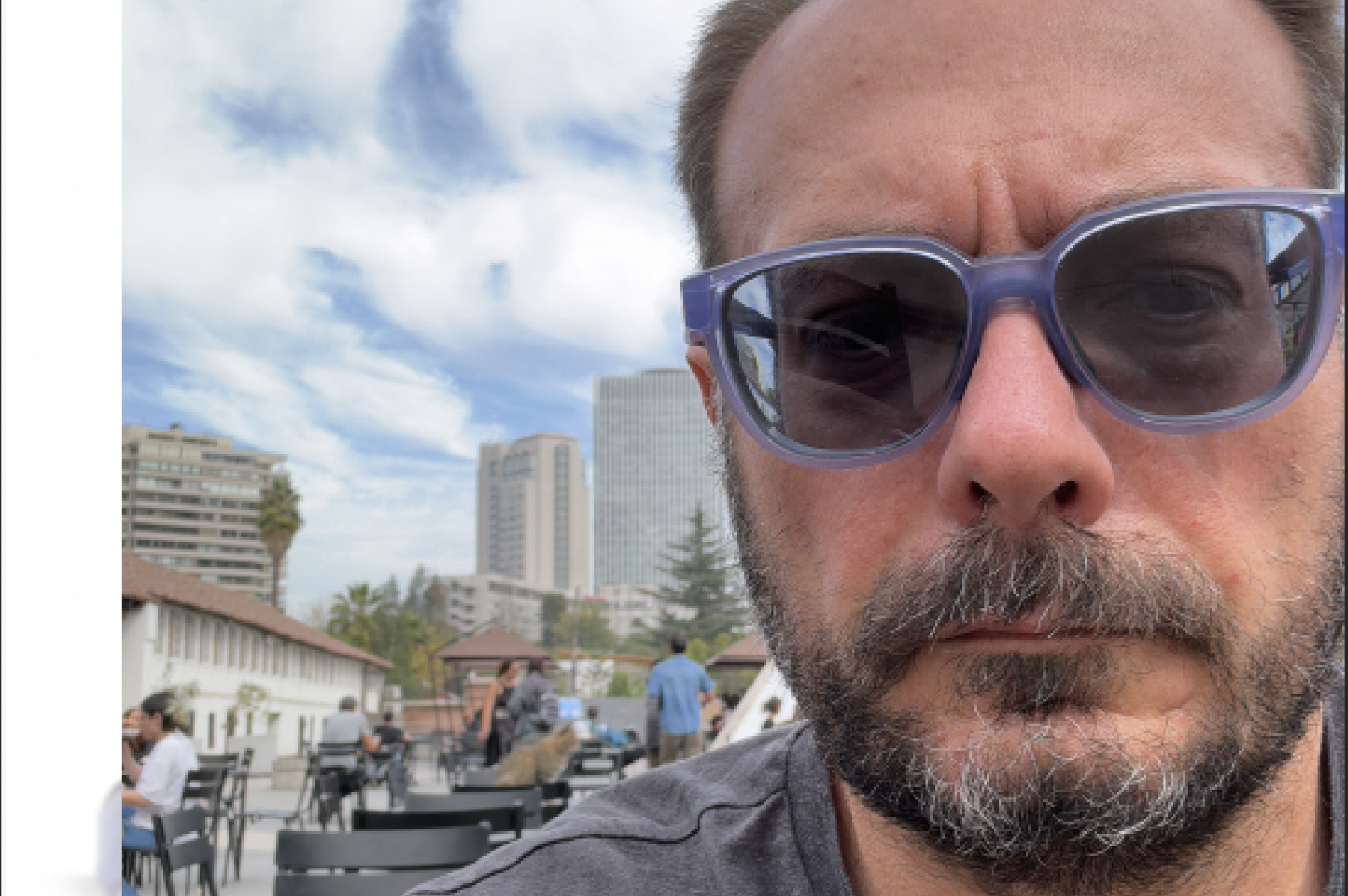
Camillo Boano
Professor of Architectural and Urban Design
Camillo Boano researches urban design criticism and philosophies for architecture. He is Full Professor of Architectural and Urban Design at the Polytechnic di Torino. He has practiced architecture in situations of conflict, emergency and urban informality in different contexts of the Global South and has worked on radical pedagogy and collective planning processes in Asia Middle East and Latin America. From 2006 to 2019 he directed the MSc Building and Urban Design for Development at Development Planning Unit, UCL, and was co-director of the UCL Urban Laboratory (2011-2023). Since 2020 he returned to Italy at the Polytechnic di Torino, DIST Interuniversity Department of Regional and Urban Studies and Planning, where he teaches and does research. He currently researches in Latin America, the Middle East and the Black Mediterranean.
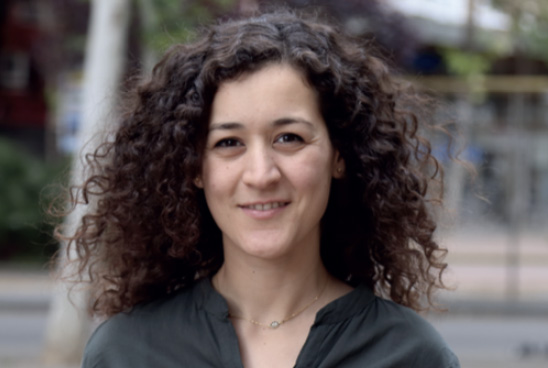
Konstantina Chrysostomou
Social architect and shareholder at Estel Coop
Based in Spain and working on projects across Europe. My approach to urban strategies, public space design, and citizen cooperation is shaped by diverse experiences and a passion for creating inclusive public spaces. I’m dedicated to empowering civic engagement and democratizing urban environments, whether in local neighborhoods or regional contexts.
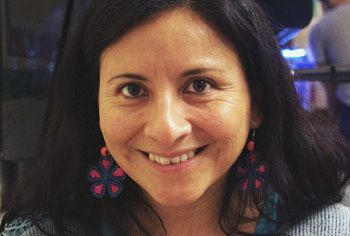
Rossana Poblet
Ecological Infrastructure & Nature-based solutions
As an urban-environmental specialist with over 20 years of experience, Rosanna has been actively involved with informal urban transformation processes in contested and post-conflict regions in the Americas, Africa and Europe. As an architect and urban planner, Rossana has joined applied-research projects integrating socio-cultural-political aspects with environmental concepts like ecological infrastructure, nature-based solutions and water sensitive urban design. Her expertise focus on co-designing socio-environmental strategies to revert environmental injustices in the so-called global South. She is a visiting lecturer in different global universities, a CIM-GIZ expert and lives between Berlin and Lima.
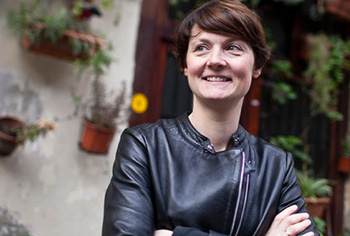
Isabelle Anguelovski
BCNUEJ
Social scientist. PhD, Massachusetts Institute of Technology. Her research is situated at the intersection of environmental policy and planning, social inequality, and development studies. Her recent research has examined environmental mobilization and revitalization in low-income and minority neighborhoods in the Global North and South. She has worked for international development organizations and consults for NGOs on indigenous peoples’ rights, urban and environmental planning, gender policy, and urban climate mitigation and adaptation programs.
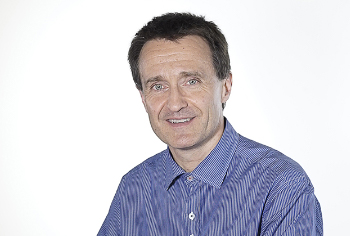
Pere Vall
Cultural landscapes
Architect. PhD in Urban Design and Planning. Associate Professor at UIC School of Architecture. His research is focused on cultural landscapes and regional development. He is co founder of the Llobregat Colonies’ River Park, an initiative of territorial revaluation based on cultural heritage, which has received several awards. In this field, he has developed projects and plans and he has also published several papers. He is currently working on the study of the sprawl repair through heritage networks.
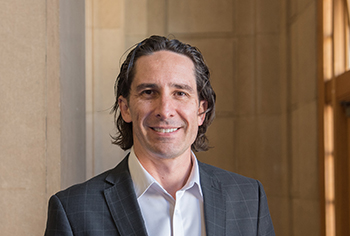
Gonzalo Lizarralde
Université de Montreal
Specialist in planning, management and evaluation of international architecture projects. He is the holder of the Chair Fayolle-Magil Construction in architecture, construction and sustainability and also the director of the IF Research Group (grif) at the Université de Montréal, which studies the processes related to the planning and development of construction projects. He is the leader of the Disaster Resilience and Sustainable Reconstruction Research Alliance, a scientific research program funded by the Quebec research funds (FQRSC) and a founding member of i-Rec, an international network for improving post-disaster reconstruction.
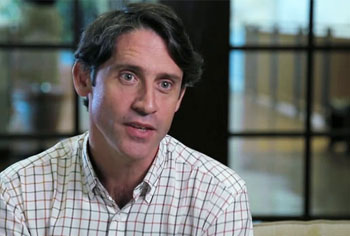
Gonzalo Sánchez-Terán
Jesuit Refugee Service International
Gonzalo has worked for the last eleven years organizing, managing and implementing emergency projects in refugee and IDP camps in Guinea Conakry, Liberia, Côte d’Ivoire, Chad and Ethiopia. He is also a regular tutor and lecturer for the International Diploma on Humanitarian Assistance at Fordham University, New York, and for the Humanitarian Cooperation Masters at Comillas University, Madrid. He has published extensively on African Geopolitics and Humanitarian Assistance through articles and books.
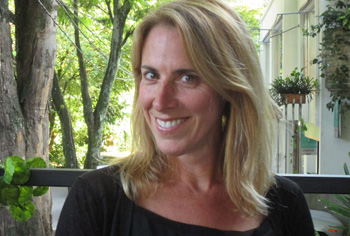
Fonna Forman
University of California San Diego
Fonna Forman is a Professor of Political Theory and Founding Director of the Center on Global Justice at the University of California, San Diego. A theorist of ethics and public culture, her work focuses on human rights at the urban scale, climate justice in cities, and equitable urban development in the global south. She serves as Vice-Chair of the University of California Climate Solutions Group, and on the Global Citizenship Commission (advising UN policy on human rights).
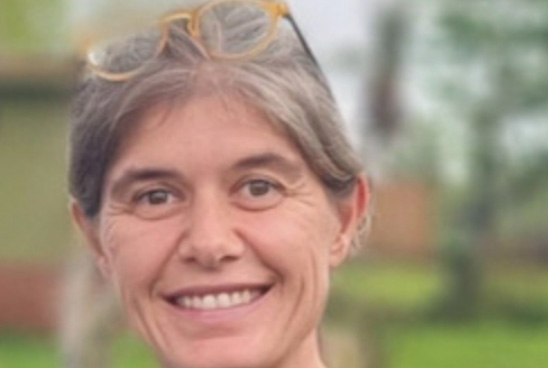
Marta Piqueras
Shelter&Settlements + WASH
MS. International Humanitarian Action and B.Arch by the School of Architecture in Madrid (2004, ETSAM), she worked in the private sector in Spain for 6 years before she became a Humanitarian. Specialized in Shelter and Settlements, Shelter Coordination and WASH, she has managed programs during preparedness, emergency response and recovery since 2011. With a focus on disasters caused by natural hazards she´s worked within the Red Cross and Red Crescent Movement and other INGO’s. Striving for a locally-led humanitarian action with a protection and people-centred approach, she has worked alongside displaced and non-displaced populations in complex and volatile contexts such as Haiti, Philippines, Greece, Peru, Sierra Leone, Honduras and the Pacific. She has advised National Governments and built the capacity and coordinated efforts from different key stakeholders.
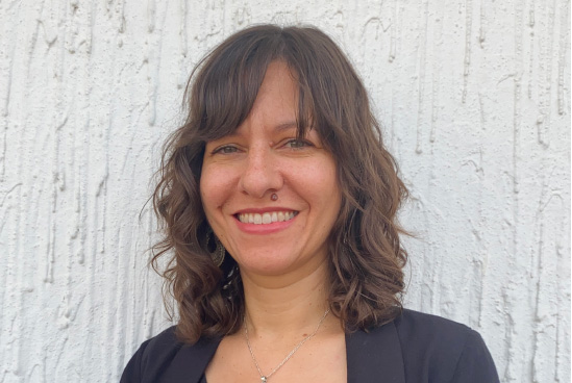
Shareen Elnaschie
Office of Displaced Designers
Trauma-informed architectural designer, creative researcher and design educator and facilitator. She has international experience working with marginalised communities on inclusive participatory research and co-design projects. She has tutored and guest lectured at numerous academic institutions including UCL, UAL, University of Groningen and Umea University. In 2016 she founded Office of Displaced Designers [ODD], a non-profit that uses design and education to support displaced and marginalised designers and their wider communities. She is a MICSEA graduate of class 2012-2013.
Melissa García Lamarca
BCNUEJ
Melissa holds a PhD in Geography from the University of Manchester, an MSc in Building and Urban Design in Development from University College London, a Graduate Diploma in Community Economic Development from Concordia University and a BA in Geography and Economics from McGill University. She is explores the structures and channels through which political economic processes generate urban inequalities, as well as how collective urban struggles can disrupt the inegalitarian status quo and open up new alternatives.
Verónica Sánchez Carrera
Cofounder of n'UNDO and Technical Office n’OT | Global-Human-Environment
PhD. Architect, Independent professional in urban planning and architecture since 2004. She is an expert in emergency architecture for infectious diseases, she has specialized in WASH and in Development of Human Settlements. She is a member of the Infectious Diseases team of the World Health Organization. In 2007 she focused her activity on Humanitarian Aid, where she has worked in different organizations and countries. Her practice includes urban and territorial consultancies, evaluations and technical support in humanitarian programs. Throughout the last eighteen years she has combined her professional activity with teaching and research.

Elia Apostopoulou
Human Geographer & Political Ecologist
PhD, Aristotle University of Thessaloniki, 2009. Elia Apostopoulou has held postdoctoral and lectureship positions in the Universities of Cambridge and Oxford and from 2019 to 2022 she has been a Senior Research Fellow in the Cambridge Institute for Sustainability Leadership. Since 2020 she is an editor of Dialogues in Human Geography and in August 2021, she was awarded a 5-year Ramon y Cajal Senior Research Fellowship after ranking 1st in social sciences across Spain. Currently, she is based at ICTA-UAB where she leads the research line Planetary Urban Infrastructures in the Barcelona Lab for Urban Environmental Justice and Sustainability.
Kathrin Golda-Pongratz
Migration & Self-organizing urbanization
Architect, urban researcher and curator. PhD in Urban Planning from Karlsruhe Institute of Technology (KIT). Author of numerous publications, among them co-author of the book John F.C. Turner. “Autoconstrucción. Por una autonomia del habitar“ (FAD Award in Thought and Criticism 2019). Member of the Academia Europaea and of the Institut dels Passats Presents of Barcelona’s city council. Her research focuses on urbanization processes and migration, Latin American urbanism, housing policies, structural change of urban societies, postcolonial urbanization, non-formal urbanism and place-making strategies, public space and urban memory.
Ebru Gencer
Columbia University
Ph.D (2007) and MPhil from the Urban Planning Program at Columbia University. Founding Executive Director of the Center for Urban Disaster Risk Reduction and Resilience (CUDRR+R), a non-profit research center based in New York City. She is also an Adjunct Associate Professor of Architecture, Planning and Preservation at Columbia University; Co-Chair of the Urban Planning Advisory Group (UPAG) to the UN Secretary General’s Special Representative on Disaster Risk Reduction; and a member of the Steering Committees of the Making Cities Resilient Campaign and the Global Alliance for Urban Crises.
Eefje Hendriks
University of Twente
Assistant professor in Disaster Resilience and Humanitarian Assistance at the University of Twente in the Netherlands. Eefje has a master’s in Architecture and in Building Technology, and a PhD in Post-disaster Reconstruction at the TU Eindhoven. She aims to scale up humanitarian and governmental recovery assistance by understanding the wider impact of aid interactions on affected communities. Therefore, she studies behavior of disaster affected populations in relation to safety and resilience of the built environment, especially in the global south. She has a work and publication record in the field of circular and modular shelter design, disaster risk reduction, disaster resilience, humanitarian assistance, self-recovery, and decision-making, migration in Europe, and adaptation to climate change of the built environment for more than 10 years.
Apen Ruiz
Cultural heritage & Gender in development
PhD in Anthropology. Her PhD research examined the relations among anthropology and gender in Mexico. She has written various articles and a book on this topic. Her current research interests lie in the interactions between heritage and communities with a focus on how gender needs to be introduced in every phase of research, and the investigation of sexual violence and protocols to detect violence in research institutions. She is a member of Simref, a group of scholars interested in feminist qualitative methodologies, and has been advisor for students working with issues of gender and development, heritage and memory and the politics of development.
Brett Moore
Shelter and Settlements
Chief of Shelter and Settlement Section of the United Nations High Commissioner for Refugees, where he coordinates humanitarian shelter actors in both preparedness actions and disaster response. Prior to joining UNHCR, he was humanitarian shelter, infrastructure and reconstruction advisor with World Vision International, deploying to conflict and disaster zones around the world. He led teams to ensure a coordinated humanitarian response for significant global emergencies, and guided rebuilding efforts for disaster and conflict-affected communities ranging from refugee camps to urban slums.
Nerea Amorós Elorduy
Creative Assemblages
M.Arch, PhD (UCL). Alumni of our masters program. Nerea is an architect and researcher with experience in refugee assistance, education, and health projects with emphasis on community participation in East Africa and in post-conflict environments. She contributed to create the School of Architecture at the University of Rwanda and co-founded ASA Studio based in Kigali. Her PhD research focused on mapping the built environment elements that affect young children’s learning living in long-term refugee camps in Southwest Uganda, Rwanda, and Northwest Kenya. She is the founder of the interdisciplinary studio Creative Assemblages in Kampala, Uganda.
Aditya Kumar
United Nations Relief and Works Agency
Aditya has a master degree in Architecture MR+D (Metropolitan Research and Design) from the Southern California Institute of Architecture, in Los Angeles. He work focuses on supporting communities living in poverty stricken slums in Southern and Eastern Africa, with a strong focus on South African slums, townships, housing and backyard communities. He has an outstanding work which comprises among others the reconstruction of Nahr El Bared Palestinian refugee camp, and is Head of the Design and Planning Unit of the United Nations Relief and Works Agency in Tripoli, Lebanon.
Eva Samalea
Architect and Humanitarian Expert
Known for her commitment to promoting sustainable interventions in humanitarian contexts, she has extensive experience implementing shelter and WASH programs in various crises and serving as Shelter Cluster Coordinator. Currently, she is working with IFRC on developing the Environmental Country Profile for Myanmar Shelter Cluster. Eva actively promotes bamboo worldwide as a catalyst for sustainable development through MANA Bamboo, and particularly in Europe as co-founder and chair of the Iberian Bamboo Association (AsIB). She combines her work in the humanitarian and development sectors with a private practice focused on sustainable and harmonious architecture and interior design. As an international lecturer and TEDx speaker, she inspires collaborative and sustainable solutions across sectors.
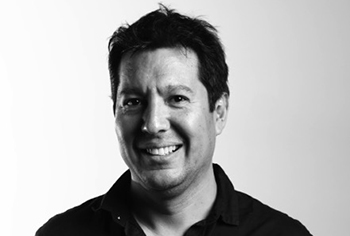
Esteban Leon
UN-Habitat
Chief Technical Advisor of the City Resilience Profiling Programme of UN-Habitat. He has a background in economics, finance, shelter/housing and settlements program design and management, capacity building, as well as building construction and reconstruction projects in post-crisis situations and urban resilience building. He has worked in the private sector (banking, microcredit and microfinance projects in Argentina and Bolivia), NGOs (slum upgrading, building constructions and reconstruction programmes in Bolivia and Kenya) and has been working for UN-Habitat since 2002 globally but based in Nairobi, Geneva, Panama and Barcelona.
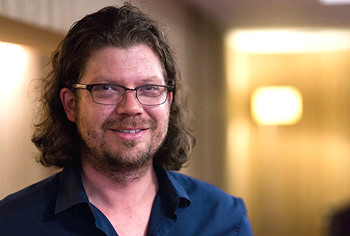
Eric Cesal
Architect
Eric is a designer, writer and post-disaster expert, having led on-the-ground reconstruction programs after the Haiti earthquake, the Great East Japan Tsunami, and Superstorm Sandy. He has been called “Architecture’s First Responder” by The Daily Beast for his work leading Architecture for Humanity’s post-disaster programs from 2010 to 2014, and is currently working on his second book about how foreign and economic policies of the developed nations aggravate the conditions that lead to catastrophic disasters. He currently works as the Special Projects Director for the Curry Stone Design Prize and co-hosts Social Design Insights, a weekly podcast with the leading voices of the social design movement.
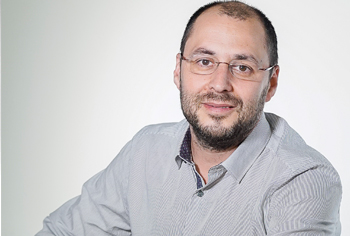
Emilio Hormias
Architect
Associate Professor at EPSEB-UPC. Coordinator of the NGO University without Borders – USF. Emilio implements social and educational facilities and planning projects in developing countries and his research is focused on building restoration and low cost materials. He is also co-funder of the firm Bestraten Hormias Arquitectura SLP, in Barcelona.
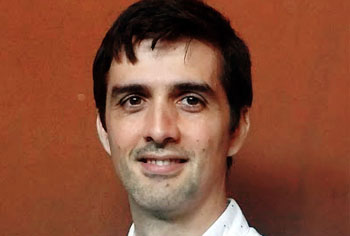
Alejandro de Castro
Latin Lab, GSAPP Columbia University
Architect with a Master of Science in Advanced Architectural Design from Columbia University in New York and a PhD in Architecture, he coordinated GSAPP’s Latin Lab from 2010 to 2016 and has taught at Harvard University, the Pratt Institute and the Technical University Darmstadt, among others. Alejandro's work explores the rhetorical dimension of planning and architecture in marginalized communities to propose spatial practices that are sensitive to both form and policy.